
Horses Started
green-broke to finished
Professional Experience
full-time training
Owner-Reported Improvement
at 30-day check-in
Injury Incidents
under saddle, ever
The Three Programs
Every horse that comes through here gets assessed on intake day. The program below that matches your horse's current level is where we start — not where we think they should be.
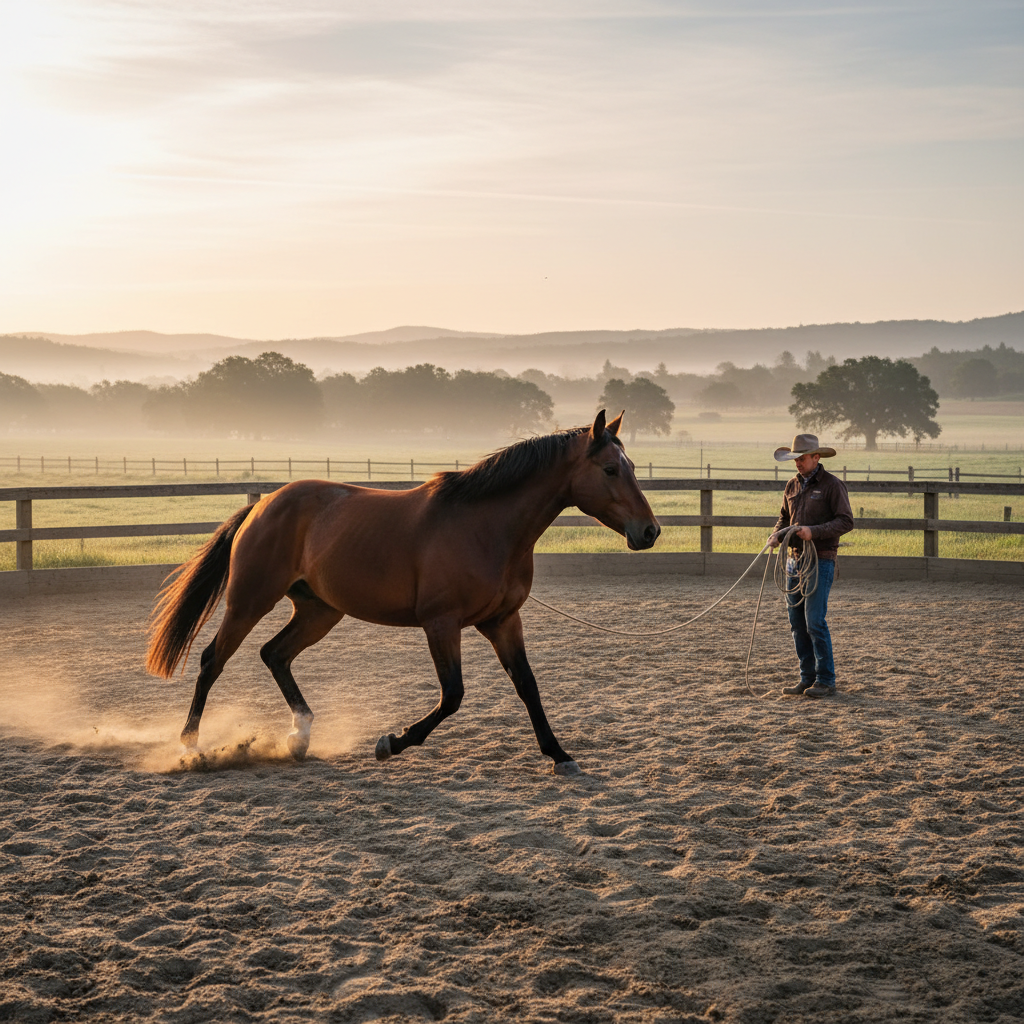
Sixty-Day Colt Start
Green-broke to soft-mouthed partner
For horses with minimal or no prior handling under saddle. The sixty-day program covers halter work, saddling, first rides, steering, stopping, and basic lead departures — all built on pressure-and-release timing so the horse learns to search for the right answer rather than react to pain.
- Days 1–14: Ground manners, saddling, desensitization
- Days 15–30: First rides, walk/trot steering, stop cues
- Days 31–60: Loping, lead departures, trail confidence
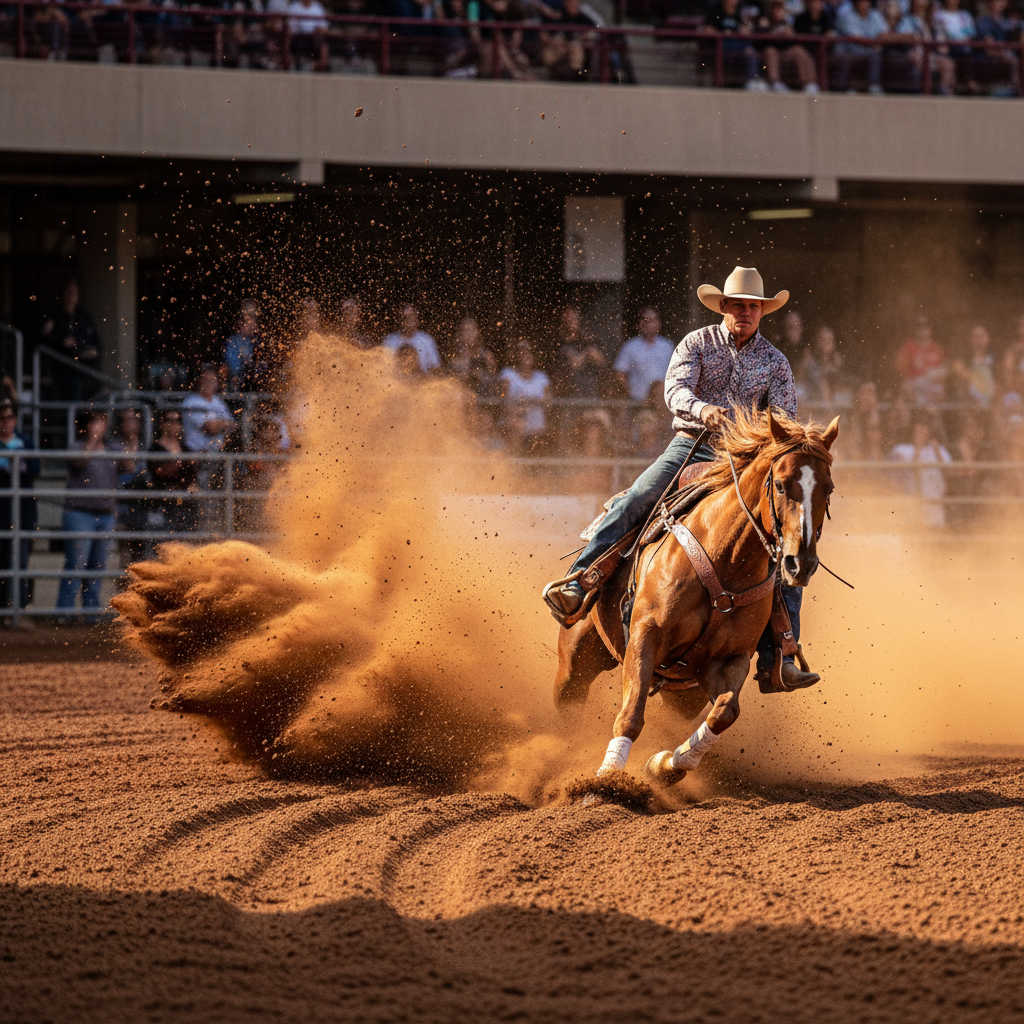
Reiner Tune-Up
Futurity-ready in thirty days
For horses that know the basics but have lost collection, responsiveness, or pattern consistency ahead of a futurity or show season. Targeted work on spins, stops, lead changes, and rollbacks with video review at days 10, 20, and 30.
- Pattern consistency under show pressure
- Lead change timing and straightness
- Stop depth and slide-plate evaluation
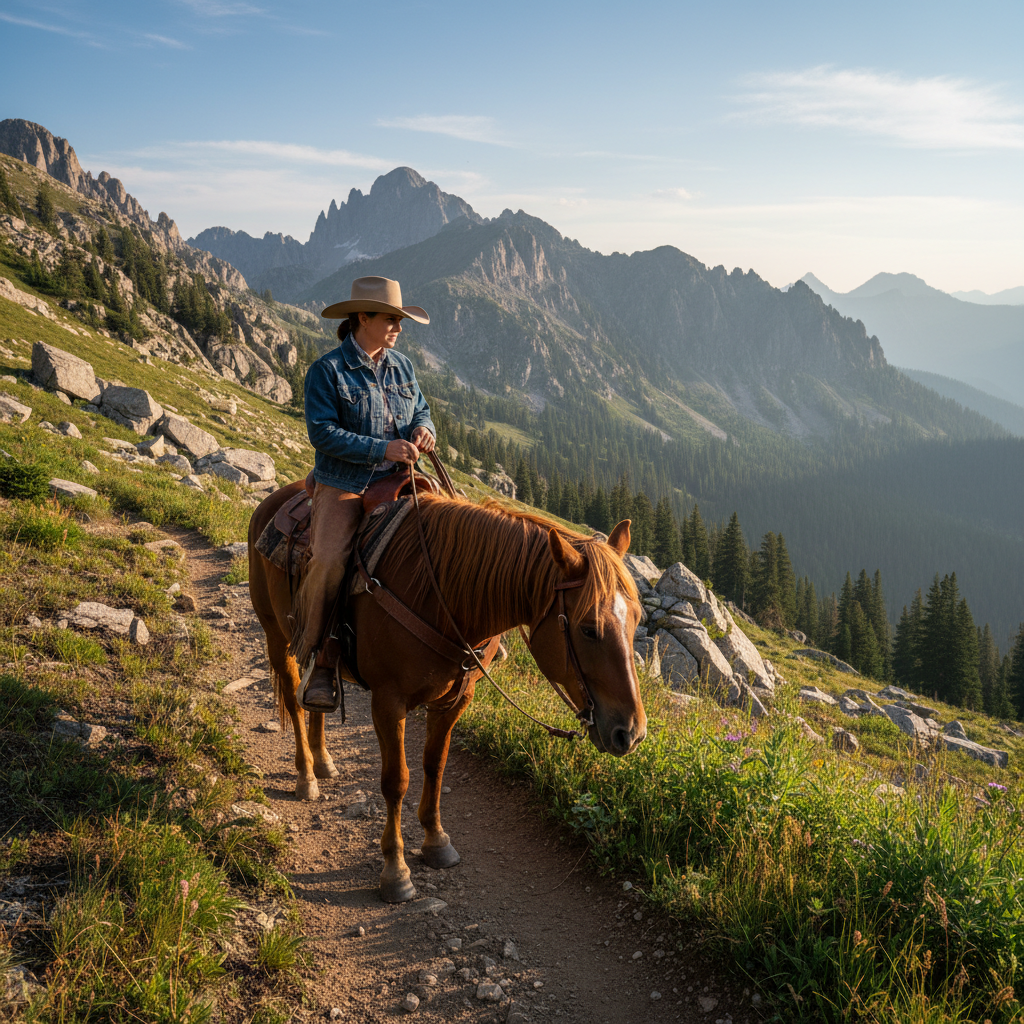
Barn-Sour Rehabilitation
Dangerous habits, dissolved
For trail horses and pasture companions that have developed barn-sour, buddy-sour, or gate-charging behaviors that put riders at risk. The program addresses root causes — not symptoms — using consistent pressure patterns the owner can maintain after the horse comes home.
- Root-cause behavioral assessment at intake
- Consistent departure and return routines
- Owner coaching session at program close
What happens in the first week?
The first week is observation and groundwork — no saddle, no rider. Your horse spends 48 hours settling into the new environment, learning that feed comes on a schedule and that pressure from a human means something specific. Horses that come in hot and nervous are usually calmer by day three once they understand the pattern.
Days three through seven are round-pen work at liberty: reading body language, establishing go and whoa from a distance, watching how the horse processes pressure. Everything I learn that week shapes the sixty days that follow.
"By day seven I can tell you more about your horse's mind than most owners know after two years of riding. That's not a boast — that's what happens when you watch instead of push."
What does a training day look like?
Horses are worked once per day, forty-five minutes to an hour, six days a week. Sundays are turnout and rest — no exceptions. Overworking a young horse in training is the fastest way to create a sour disposition, and I won't do it.
Sessions happen in the morning before the heat builds. Ground work precedes every ride. After the session, horses are cooled, groomed, and returned to their stall or paddock. Feed twice daily, hay available around the clock.
6:00 AM
Morning feed
7:30 AM
Training session
5:00 PM
Evening feed & turnout check
Do you work with stallions?
Yes, with conditions. Stallions are accepted on a case-by-case basis following a phone consultation. I need to understand the horse's history, any known aggression toward handlers or other horses, and the owner's long-term plans (breeding program, show career, gelding consideration).
Stallions are housed in a separate barn section with solid-wall stalls. They are never turned out with other horses. The intake contract for stallions includes an additional liability rider — I'll walk you through it before you haul in.
Stallion Intake Requirement
A phone consultation is required before a stallion is accepted. No exceptions to this policy.
What's your policy if my horse doesn't progress?
Honest answer: some horses don't progress on the timeline we'd hope for. Soundness issues surface, a horse's mental ceiling turns out to be lower than their conformation suggested, or a trauma history creates a wall we can't move through in sixty days.
At the thirty-day mark, every owner receives a written progress report. If I believe the program cannot achieve the agreed-upon goals, I'll tell you plainly — and I'll give you a recommendation for the next step, whether that's extending the program, adjusting the goal, or a referral to a specialist. You will never receive a horse back without a clear explanation of where we landed and why.
No partial refunds are issued for horses that don't progress, because the time and resources are expended regardless of outcome. This is documented in the contract so there are no surprises.
Can I visit during training?
Yes — with advance notice. Unannounced visits are not permitted because they disrupt the barn schedule and, more importantly, because seeing an owner unexpectedly can set back weeks of desensitization work on a green horse. Your horse is learning that the barn is a calm, predictable environment. An excited reunion in week two undoes that.
Scheduled visits are welcome on Saturdays between 9 AM and noon. You're encouraged to watch a session from the rail. You will not be permitted in the round pen or arena during active training — not because I'm hiding anything, but because one nervous owner shifting their weight sends a signal to the horse that I then have to explain away.
"Come watch. Ask questions afterward. You'll understand your horse better after thirty minutes on the rail than you would from a dozen text updates."
How often will I hear from you?
Weekly video updates sent every Friday, showing a brief clip from the week's work. Written progress notes at days 14, 30, and 45. A final written report and in-person demonstration ride at program close.
For anything urgent — a vet call, an injury, a significant behavioral development — you'll hear from me the same day. I don't bury information. If your horse colicked at 2 AM, you have a message by 2:05.
Weekly video clips
Every Friday evening
Written progress notes
Days 14, 30, and 45
Urgent contact
Same-day, always
Final demonstration
In-person at program close
Who's liable if something happens to my horse?
The short answer: it depends on the cause, and the contract is specific about this. The training agreement contains a standard equine activity liability release that reflects state law — horses are inherently dangerous animals and the law recognizes that.
For incidents caused by negligence on my part — improper equipment, failure to call a vet when one was clearly needed, unsafe facility conditions — I carry professional liability insurance and will not hide behind the contract. For incidents that are the inherent nature of working with young horses (a spook, a fall, a kick from a pasture companion), the release applies.
I've never had a horse injured under saddle in fourteen years of professional training. I tell you that not to make liability feel theoretical, but because the protocols that produced that record are the same protocols in your horse's program.
Professional Liability Coverage
Active professional liability policy. Certificate of insurance available on request before signing.
Insurance requirements
Mortality insurance is strongly recommended for horses valued over $5,000. It is not required to enter the program, but if a horse dies during training from a cause not attributable to my negligence, the contract is clear that I do not provide compensation.
Major medical coverage is also worth carrying — vet bills during an intensive training program can accumulate. I work with two local veterinary practices on an on-call basis. Emergency calls are billed directly to the owner; routine vet work (coggins, vaccinations) is coordinated with your existing vet if you prefer.
Mortality insurance
Recommended for horses $5K+
Major medical
Recommended for all horses
Current Coggins
REQUIREDRequired at intake
Vaccination record
REQUIREDRequired at intake
What does the contract cover?
The training agreement is a four-page document. It covers: the agreed-upon program and goals, the daily care standards I commit to, the liability release and its scope, the payment schedule, the early-termination policy, and the dispute resolution process.
The intake packet you download from this page contains a sample contract so you can read it before you haul in. Nothing in the contract will surprise you if you've read this page — I've written the FAQ to mirror the contract's most frequently questioned sections.
I am not an attorney. If you want a lawyer to review the contract before signing, I encourage it. The contract is fair, not complicated.
Feed, farrier & vet — what's included?
Board includes quality grass hay available around the clock, twice-daily grain (adjusted to the horse's workload and condition), fresh water, and stall cleaning. Premium feed programs (alfalfa, senior feed, supplements) are available at cost.
Farrier visits are scheduled every six weeks through my regular farrier. Shoeing costs are billed directly to the owner. If your horse has an existing farrier relationship you'd like to maintain, coordinate timing with me in advance.
Routine and emergency vet care is arranged through my on-call vets. All vet bills are the owner's responsibility and will be forwarded with documentation. I will always call you before authorizing non-emergency treatment, but in a true emergency I will act first and call second.
Can I pull my horse before the program ends?
Yes. You own the horse and you can pick it up at any time with 48 hours' notice. Monthly fees are not prorated — if you pull a horse in week three of month two, the full month-two fee applies. This is standard in the industry and is in the contract.
I'll tell you honestly where the horse is in the program at the time of pickup and what the gaps are. If the horse leaves at day 28 instead of day 60, you need to understand what's been built and what hasn't, so you don't inadvertently undo the work in the first week home.
Pricing & payment schedule
Payment is due on the first of each month. The first month's payment and a $200 non-refundable intake fee are required before the horse arrives. No horse enters the facility without cleared payment.
Colt Start
$1,800
/month + board
Reiner Tune-Up
$2,200
/month + board
Barn-Sour Rehab
$1,600
/month + board
Board is included in all program fees. Farrier, vet, and premium feed supplements are billed separately at cost. A $200 non-refundable intake fee applies to all horses.
Download the Owner Intake Packet
The intake packet contains the sample training contract, the facility rules, the pre-arrival preparation checklist, and the health documentation requirements. Fill out the form and it lands in your inbox within the hour.
2 stalls available for March 2026 start dates.
Schedule a Barn Visit
The best way to decide whether this is the right place for your horse is to come and see it. Saturday barn visits run 9 AM to noon. You'll see the facility, watch a training session from the rail, and have time to ask questions.
No obligation, no sales pitch. If it's not the right fit, I'll tell you that too.
"A horse that understands pressure-and-release isn't obedient — it's a partner. That's the difference between a horse you manage and a horse you ride."